Product photography

Detailed product photos are one of the best ways to get the attention of visitors in your online store. Consistency in image design is essential, across all sales channels. For new online stores, this is often a challenge. We have listed the tools and ways that help you create quality product photos.
Content:
- Types of product photos
- Tools to create product images
- Pros and cons of tools
- Using a manufacturer’s images
- Product images across channels
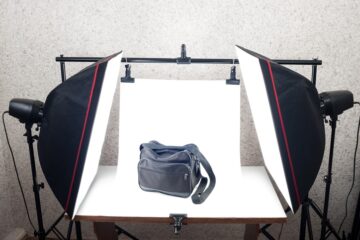
Types of product images
In addition to product descriptions, images are one of the decisive factors that will make visitors place an order. Having more content to look at is a way of keeping visitors in your store for a longer time, but it will also give them more confidence about your product.
Most online stores display their product from multiple angles, in a close-up or more distant. Changing up different backgrounds can also make a product more appealing, as well as including a ‘lifestyle photo’. Or think of pictures of models wearing an item in online clothing stores. This shows visitors how a product can and should be used.
Getting the right photos is an investment
If you have just started your own online store, getting product images with different angles, lighting, backgrounds and models is difficult. This often takes a big investment of time, and money, as well. Because of that, many online sellers use a manufacturer’s photos instead, or create their own images with specific tools.
Product photo tools
Tools for European retailers, to automatically make your own product photos, are:

AI product photography platform for ecommerce brands. It helps you create product photos, lifestyle images, AI model photos and marketing visuals from a single product image. The platform is built for online retailers that need consistent visuals across large product catalogs.
- free plan available
- AI product photography
- AI fashion models
- 4K image exports
- built for ecommerce product photography
- code PHOTO15 gives 15 percent discount

Creates images from 3D product models for all your products. After sending a physical sample, they can create product photos, 3D images, a virtual try-on, AI photos and CGI. The company then handles management and distribution across all your sales channels.
- built for ecommerce teams
- multiple image variations
- batch image generation
- based in Stockholm, Sweden

Photoroom was founded in 2019. It offers full AI photo shoots, and an image generator, background remover, AI fashion models, as well as product staging. It is geared towards ecommerce companies, and can process batches.
- 7-day free trial
- batch editing
- virtual models
- based in Paris, France

Italian company Zakeke offers a 3D product configurator with AI. Based off a flat product photo, it can create a 3D model that customers can view. It also gives customization options, like colors, materials or components. Suitable for footwear, furniture, jewelry, gadgets, sports equipment and more.
Advantages of using product image tools
Using (AI) tools is often cheaper than hiring equipment and getting samples for an actual photoshoot. Especially if you are an online store that sends with dropshipping, where products are sent directly from the supplier to your end customer, having to order samples of every item to do a photo shoot is tedious.
There are many AI product photography tools that can create, edit or enhance images. With some, you just take a photo of a product with your mobile phone, and then the tool will create several scenes, angles, lighting setups or even seasonal looks.
Some tools can create photo shoots of your product with just one picture from your mobile phone
This makes creating product photos for your online store a lot easier. Especially for beginning online sellers, it can be an outcome because this will cost less than hiring a photographer or equipment. It is fast, and can help your online store look a lot more professional.
Scaling your product images also is a lot easier with a tool. Usually, AI product photography software will process your entire catalog quickly. By doing that, it can create more product images at once. This process would normally take weeks, when working with a photographer.

Disadvantages of using product photography tools
While using tools to create your own product images can save costs and time, there are also several disadvantages. AI is, of course, less creative than humans. Most tools can give you some templates, but get repetitive after that. You will often still need to put time (and money) into editing the images to get the perfect one.
Showing product images in a consistent style increases customer confidence in your online store
Additionally, most online stores show product images in one style. This creates consistency, which again will increase customer confidence. It can be difficult to achieve this with AI. One batch of images made on one day can be very different from the batch you make a day later. General purpose AI generators will interpret each prompt independently. Dedicated ecommerce tools usually have services like style locking and batch processing, to get more consistency.
Another problem is that AI is known to hallucinate. This means that product details might become altered or distorted. Picture of clothing could show the wrong stitching, or changed proportions. The images could also show distorted logos, or be missing specific features. These details are usually very subtle, which means that they can easily slip through reviews and land on your listing page.
Using a manufacturer’s product images
Another option to get product images is using the standard images that a manufacturer or distributer has of products. There is nothing wrong with this. It is cheap and you can assume that the photos sent by the manufacturer or distributor are accurate, relevant, and of decent quality.
However, a drawback to this option is that other customers of the same manufacturer are using the same pictures in their online stores. If visitors to your website notice that your product images are the same as what they have seen elsewhere, they are more reluctant to place an order.
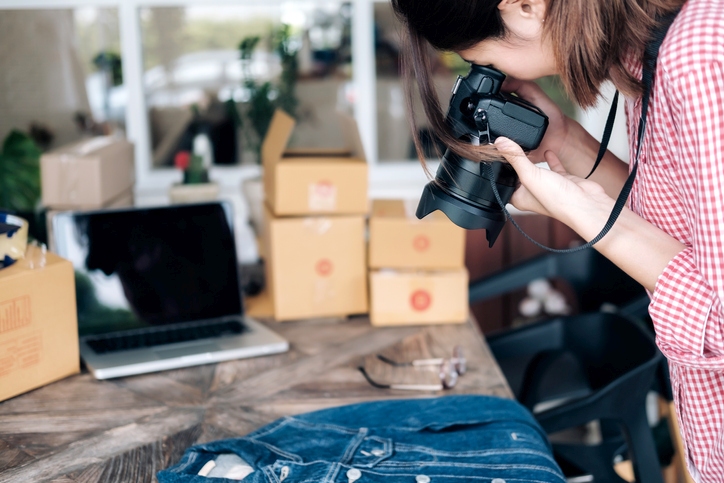
Product photos on multiple sales channels
Displaying the products that you want to sell does not happen only in your online store. Most sellers now have multiple channels where they sell. If you are selling on a marketplace, you will also need to add your product images there. Some marketplace might have specific requirements for images, to guard consistency of the platform.
Product photos on social media are very different from images on a marketplace or in your online store
Selling on social media is also becoming increasingly popular. These channels require a different kind of product image. Instagram relies more heavily on lifestyle photos, viewers might actually be put off by a simple product image with a white background. On Instagram, you need to focus on how the product will look in a bigger context, like in the house or in the garden, or how it will be used.
Content creation to sell your products on social media
Social media also has a strong focus on video content, in the form of short clips or longer videos. This means that in addition to creating product images, you will need to create video content to show your products to social media users.
Many online sellers collaborate with influencers or content creators, as they have more expertise in creating videos suited for social media. For example, they could make a review, unboxing video or ‘shopping haul’ video with your products.
